
Environmental, Social and Governance (ESG) centres on sustainability and highlights the need for Micro, Small and Medium Enterprises (MSMEs) to be proactive on ESG measures in order to fulfil the increasing expectations of regulators, investors, financial institutions, consumers, employees and supply chain partners.
Micro and small businesses who are integral to a larger firms’ supply chain, will increasingly fall within the horizon of sustainability reporting schemes or they risk losing contracts. Therefore, micro and small business need to be proactive and embed ESG measure into their business strategy, in a way that adds value, ensures responsible business activities and meets stakeholder and investor expectations. It is easy for micro and small business to dismiss ESG reporting as too expensive, but ultimately a failure to report on ESG issues could end up costing much more.
It is true that MSMEs face the daunting task of finding the time and resources to interpret the complex reporting frameworks and make sense of the rapid changes being placed upon them. MSMEs play an intrinsic role in the global and local sustainability movement. By embracing sustainable practices and leveraging technology solutions to simplify the ESG data collection, validation, and reporting MSMEs can offer products and services that make a positive impact.
The ESG framework as defined by the European Commission in April 2021 includes three principles these are Environmental, Social and Governance.
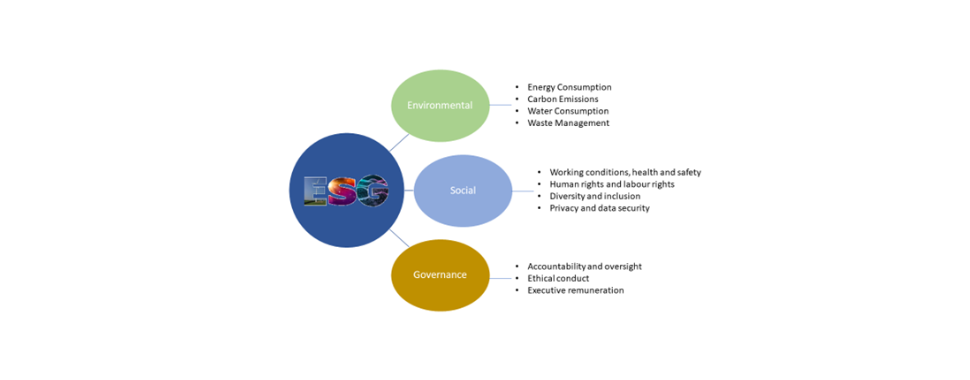
Data, technology and analytics tools are becoming central for ESG reporting and decision making. It is crucial that government and technology provides help to close the digital gap for MSMEs which is crucial for their competitiveness and growth in the digital age. Digitalisation not only streamlines ESG compliance but also enhances the ability of MSMEs to track, measure, and improve their performance in real-time. Digital platforms and software solutions can help MSMEs manage governance, risk, and compliance (GRC) requirements efficiently as well as enabling tracking and ensuring adherence to ESG reporting, regulations and standards.
Enhanced tools, such as data visualisation and feedback mechanisms, are also essential for generating easy-to understand insights and analyses that lend to MSMEs’ improving their ESG performances. Data analytics and digital dashboards enable MSMEs to monitor ESG performance in real-time. MSMEs can use predictive analytics to identify trends and make proactive improvements.
Further, government, policy makers and technology providers need to take on board that a one size approach and the complexity of the ESG reporting framework may not be sufficiently agile or align with the scale and diversity of micro and small business operations.
This disproportionate burden on micro and small business needs government and policy makers to establish some clear guidelines aligned to MSME benefits and demonstrate that the investment in ESG generates commercial returns for MSMEs.
Government and technology providers need to consider online training programs, resources and help desk support that cater for micro and small business. These programs should be freely available and free of charge. The future for MSMEs in ESG reporting might also embrace technological solutions such as the use of Intelligent Process Automation (IPA) for prepopulate reporting fields, the use of Artificial Intelligence (AI) and Machine Learning (ML) tools to have access to real-time data, data visualisation, dashboards and reporting.
SBAA will continue to monitor and update our members as we are actively in communications with government representatives.


